Archive

News

Sunday, August 9th, 2026

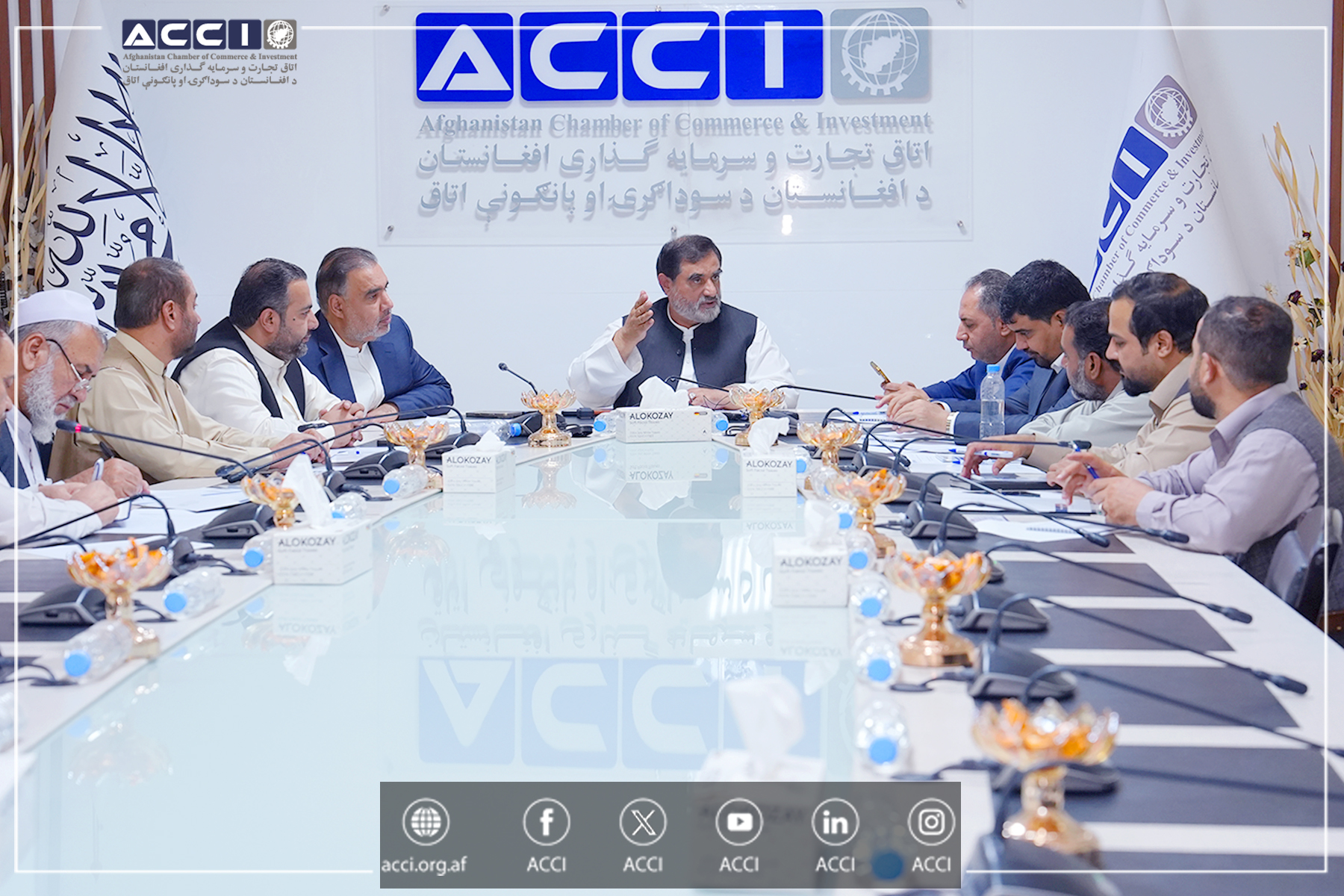
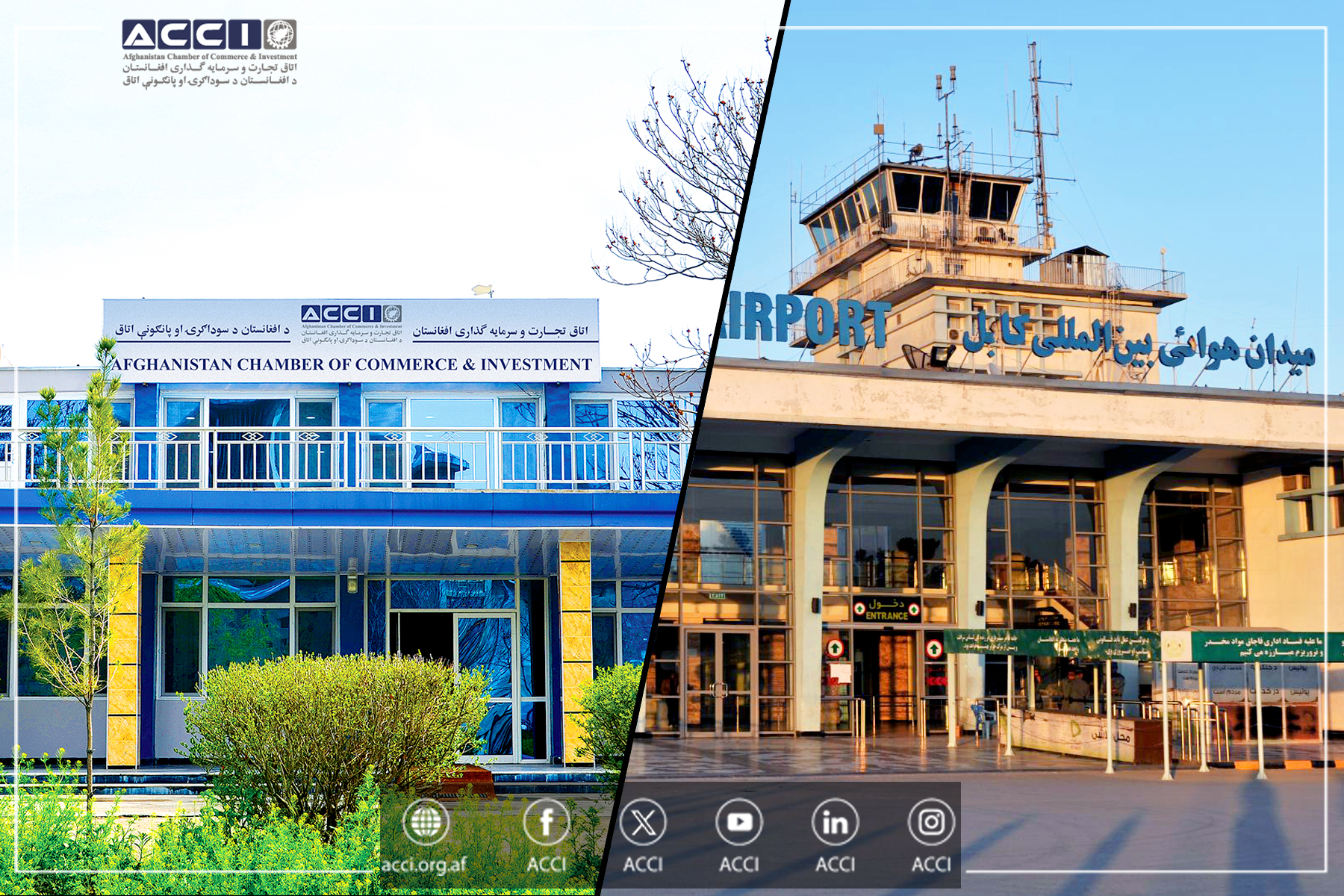
A joint meeting between the leadership of the Afghanistan Chamber of Commerce and Investment (ACCI) and the Director General of Kabul International Airport was held to discuss the challenges faced by exporters of fresh and dried fruits and explore practical solutions to facilitate their export activities.

The meeting was attended by deputies and members of the ACCI Board of Directors, representatives of companies engaged in fresh and dried fruit exports, and relevant government officials.

At the outset, Mr. Mirajan Sulaimankhel, Deputy of the ACCI Board of Directors for Policy and Government Relations, highlighted the existing challenges facing fresh and dried fruit exporters and outlined the major issues in detail.

He stated that previously, Kam Air, Ariana Afghan Airlines, and Turkish Airlines transported Afghan export products to India at a rate of approximately USD 0.80 per kilogram. However, air freight costs have increased significantly, resulting in a considerable rise in export expenses.

Mr. Sulaimankhel further noted that other issues discussed during the meeting included insufficient scanners, challenges related to hangars and standard storage facilities for handling and storing export goods, problems concerning air waybills, as well as inspection and sampling procedures.

The Deputy of the ACCI Board of Directors for Policy and Government Relations called on the Director General of Kabul International Airport to provide the necessary cooperation and attention to resolving these challenges and to take practical measures to facilitate the export process.

Subsequently, Mr. Abdul Hadi Mohammad, Director General of Kabul International Airport, emphasized the importance of exports and the role of traders and exporters in the economic growth and development of the country. He addressed the challenges raised during the meeting and assured participants that the necessary cooperation would be provided to address the existing concerns.

He further stated that special discounts have been considered on fees and other services provided by the Kabul airport authorities and relevant agencies operating within the airport, and that a significant reduction in service-related costs would be introduced in the near future.

He also stated that foreign cargo airlines operating and conducting flights in Afghanistan would be permitted to transport Afghan export consignments to third countries. This would allow such airlines, in addition to transporting cargo to their countries of origin, to carry Afghan export shipments to other destination countries.

The Director General of Kabul International Airport also announced that a new cargo company would begin operations in the near future, which would help address some of the existing challenges related to transportation and exports.

Mr. Abdul Hadi Mohammad further assured participants that fresh and dried fruit exports would be given priority and that the necessary cooperation would be provided to exporters. He also pledged support for expediting customs procedures and emphasized the provision of 24-hour services.

At the conclusion of the meeting, both sides emphasized the need for greater cooperation and coordination among ACCI, airport authorities, and relevant government agencies. They agreed to work jointly to address the challenges faced by exporters and facilitate the export of fresh and dried fruits.
Sunday, August 9th, 2026
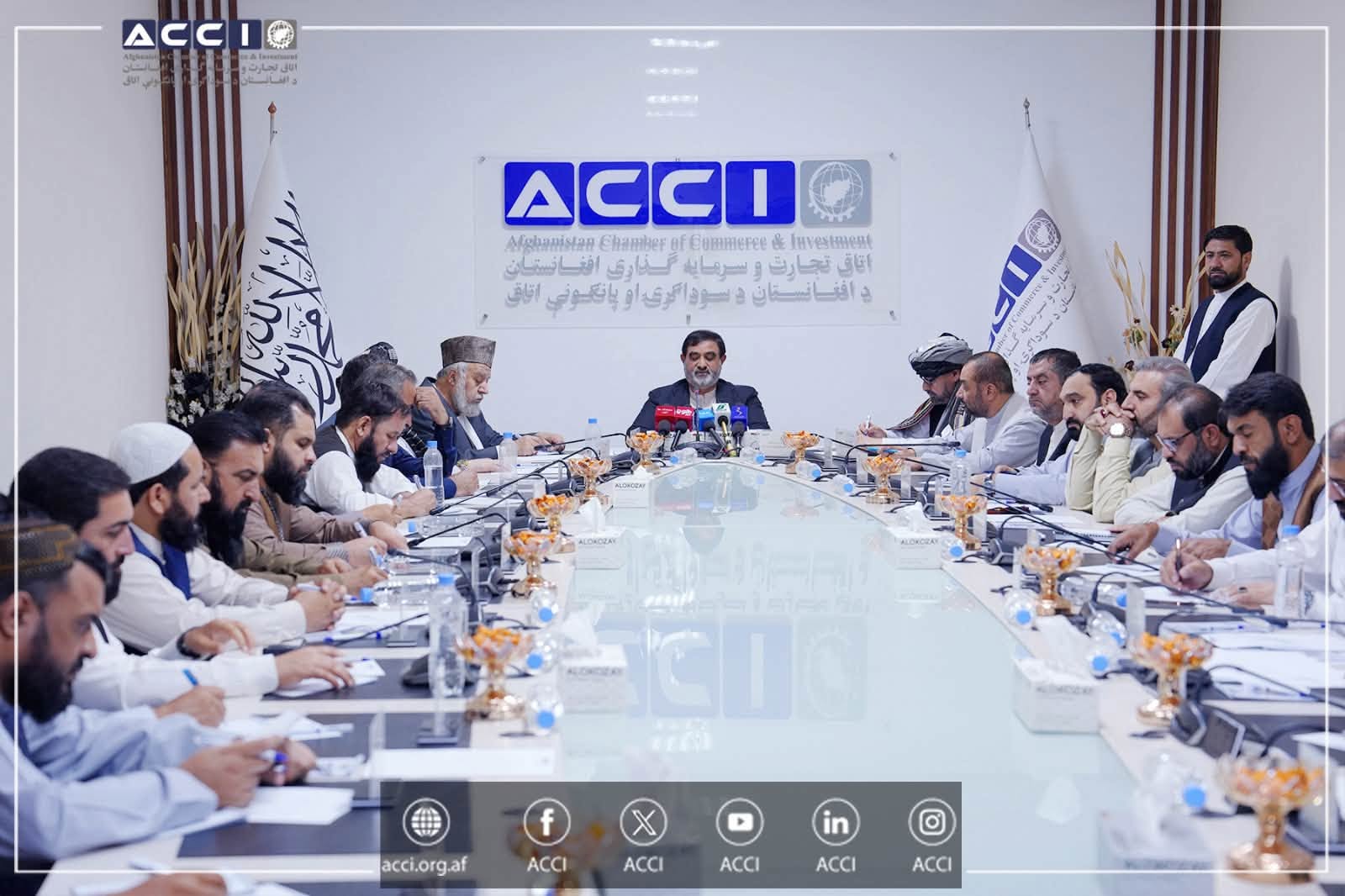
A meeting was held at the main office of the Afghanistan Chamber of Commerce and Investment (ACCI) with the participation of Mr. Sayed Karim Hashemi, Chairman of ACCI; Mr. Faiz Ahmad Khawafi, Deputy for Provincial Affairs; Mr. Mirajan Sulaimankhel, Deputy for Policy and Government Relations; and Mr. Mujib Rahman Shirzad, Deputy for Strategic Relations, together with department heads and general managers from various sections of the Chamber.
The Acting Head and deputies of the Executive Board also attended the meeting. Discussions focused on the working status of various departments, the progress of ongoing activities, existing challenges and obstacles, as well as proposals and practical solutions for improving the Chamber’s operations.
The main objective of the meeting was to strengthen coordination between the Chamber’s leadership and executive departments, directly hear the views and challenges of department heads and general managers, review the progress of activities, and take necessary measures to improve the effectiveness, coordination, and quality of the Chamber’s services.
During the meeting, department heads and general managers presented brief reports on their respective activities and responsibilities and shared the challenges and obstacles they face in carrying out their daily duties. They also presented their suggestions and recommendations for improving work processes, strengthening coordination among departments, expediting procedures, and enhancing the quality of services.
The Chamber’s leadership carefully listened to the concerns, challenges, proposals, and recommendations presented and discussed them in detail. The meeting emphasized the need to identify and address existing obstacles, strengthen coordination and cooperation among departments, prevent duplication of work, and improve internal processes.
Mr. Sayed Karim Hashemi, Chairman of ACCI, expressed his appreciation for the efforts and activities of the department heads and general managers and emphasized accountability, administrative discipline, speed and accuracy in carrying out responsibilities, and the delivery of effective services. He also issued the necessary guidance to improve the performance of the respective departments.
It was further emphasized that existing challenges and obstacles should be systematically identified and assessed, with practical solutions developed to address them. Department heads and managers were urged to seriously follow up on relevant matters within the scope of their official responsibilities and authorities.
Another part of the meeting focused on the importance of coordination among different departments and the need to establish a systematic process for information sharing, reporting, and follow-up. The Chamber’s leadership called for departmental activities to be carried out in accordance with clear plans, objectives, and responsibilities, with work results and achievements regularly evaluated and reported.
The proposals presented by department heads and general managers regarding improving the working environment, strengthening the professional capacities of employees, enhancing internal systems, and increasing the effectiveness of services were also considered. Necessary instructions were issued for further review and follow-up of the issues raised.
The Chamber’s leadership emphasized that department heads and general managers, as executive officials responsible for different sections, play an important role in implementing the Chamber’s objectives and programs. They were encouraged to carry out their responsibilities effectively and transparently, based on a spirit of cooperation, accountability, and coordination.
At the conclusion of the meeting, the continuation of such meetings and direct consultations between the Chamber’s leadership and officials of different departments was emphasized. Such engagements will help ensure the timely identification of challenges, while also making effective use of employees’ suggestions and initiatives to support the continuous improvement of the Chamber’s activities and services.
The meeting was held as part of ACCI’s ongoing efforts to strengthen internal coordination, improve organizational capacity, enhance the quality of services, and establish an effective, organized, and responsive institution.

Thursday, 6th August, 2026
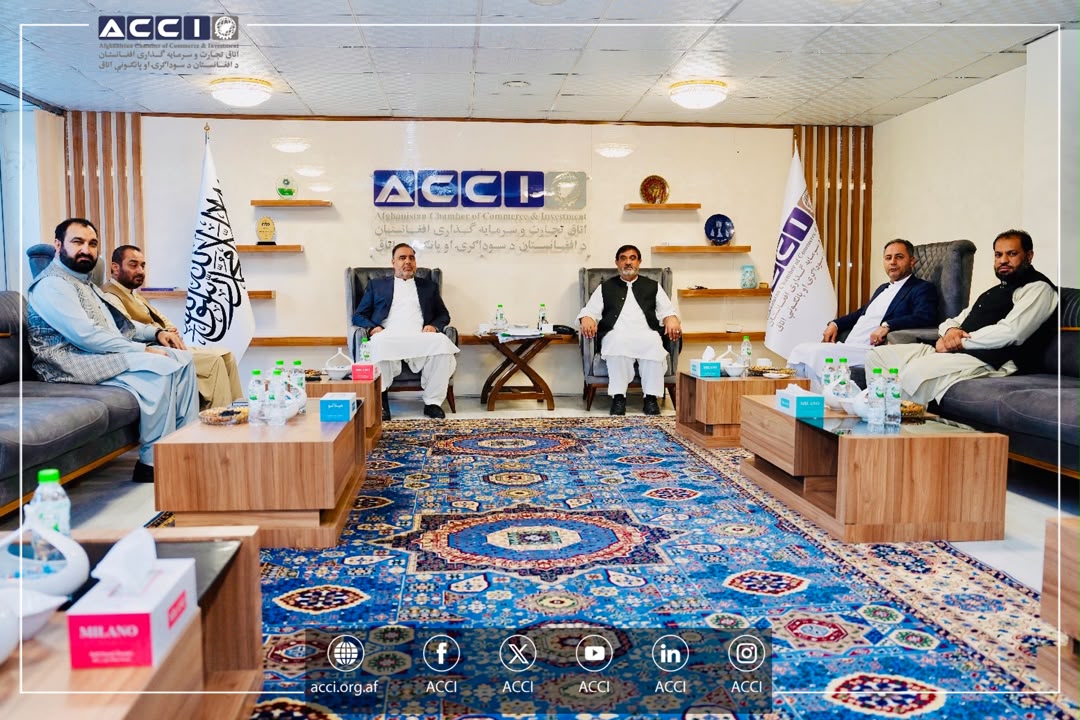
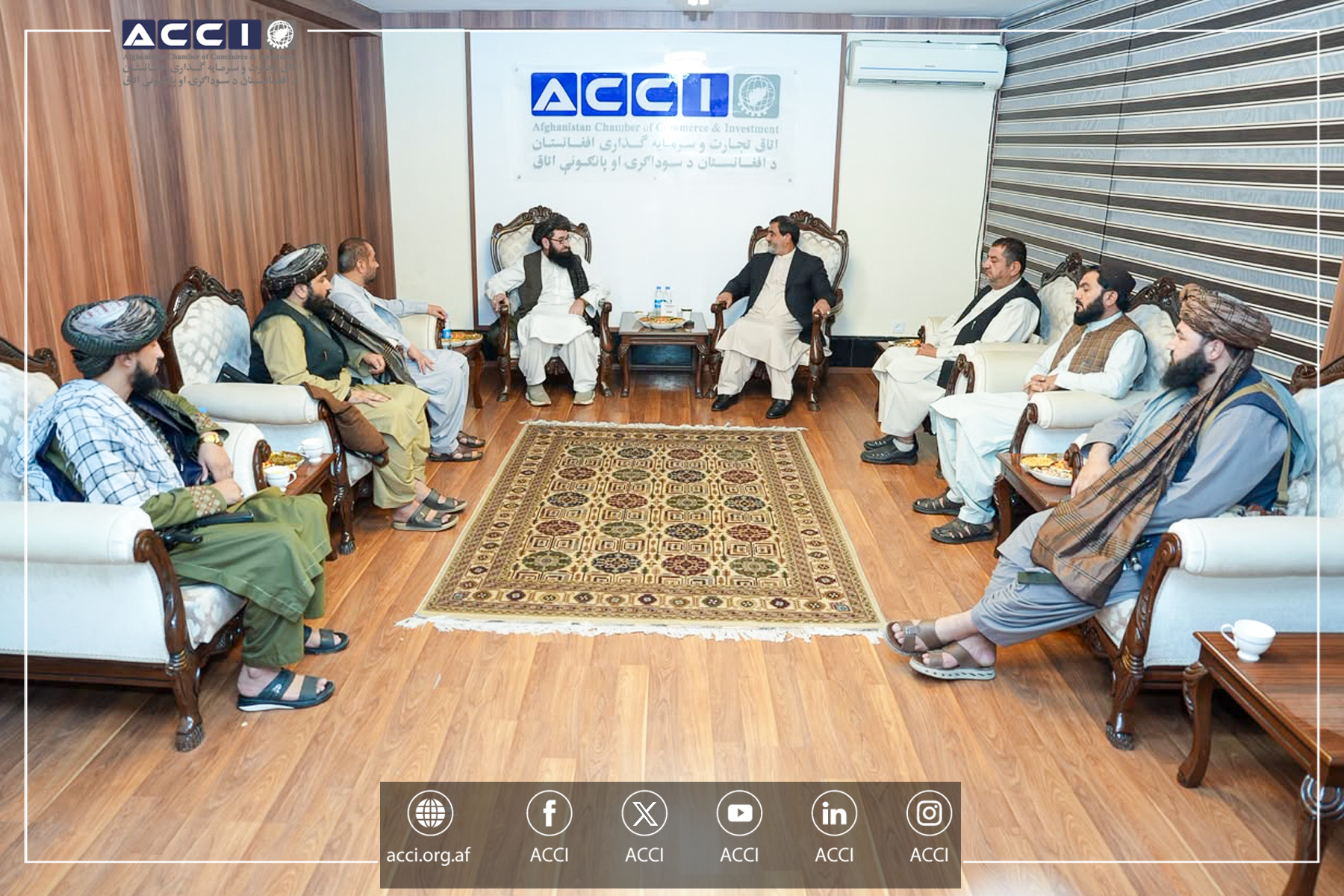
Mr. Mohammad Hanif Hamza, Governor of Faryab Province, visited the main office of the Afghanistan Chamber of Commerce and Investment (ACCI) on Wednesday afternoon and met with Mr. Sayed Karim Hashemi, Chairman of ACCI.
During the meeting, the Chairman welcomed the Governor of Faryab and emphasized the importance of strengthening the private sector, expanding commercial activities, and creating a favorable environment for attracting investment to the province. He also expressed ACCI’s readiness to cooperate in promoting economic growth and investment development in Faryab province.
The Governor of Faryab, while appreciating the activities and initiatives of ACCI, described traders and investors as valuable national assets and called for greater attention to the implementation of development projects and the encouragement of investors to invest in Faryab province.
At the conclusion of the meeting, both sides emphasized the continuation of joint cooperation, support for the private sector, and the creation of more opportunities for the expansion of trade and investment.

Sunday, 9th August, 2026
The 10th meeting of the Executive Committee of the Afghanistan Chamber of Commerce and Investment (ACCI) was held on Saturday at 10:00 p.m. due to a heavy workload, under the chairmanship of Mr. Sayed Karim Hashemi, Chairman of the Afghanistan Chamber of Commerce and Investment.
The meeting was attended by Mr. Faiz Ahmad Khawafi, Deputy of the Board of Directors for Provincial Chambers Affairs; Mr. Mirajan Sulaimankhel, Deputy of the Board of Directors for Policy and Government Relations; Mr. Arian Zalgai Azimi, Deputy for Investment; Mr. Abdul Nafi Barakzai, Deputy of the Board of Directors for Domestic Production Support; Mr. Enayatullah Seddiqzi, Deputy for Services of; Mr. Zabihullah Omarkhail, Head of the Secretariat; and Mr. Mujib-ur-Rahman Shirzad, Deputy of the Board of Directors for Strategic Affairs.
At the beginning of the meeting, Mr. Sayed Karim Hashemi, Chairman of ACCI, provided detailed remarks on the Chamber’s ongoing affairs, as well as the responsibilities and duties entrusted to the institution under the current circumstances.
He emphasized the timely fulfillment of responsibilities and assignments by the Executive Director, deputies, heads, and managers of the Executive Directorate. He also called for greater coordination among the different departments of the Chamber, effective attention to the concerns of clients, and prompt and responsible responses to traders, investors, and members of the private sector.
Mr. Hashemi stated that, as an important national institution representing the private sector of Afghanistan, ACCI carries a significant responsibility toward traders, investors, entrepreneurs, and its members. Proper and effective fulfillment of these responsibilities requires close cooperation, continuous coordination, unity of purpose, professional commitment, and a shared sense of responsibility among all members of the Chamber’s leadership and officials.
He further emphasized that, under the current circumstances, addressing the legitimate concerns and demands of the private sector, facilitating the affairs of traders and investors, and ensuring effective coordination among relevant departments are among the Chamber’s key priorities. He called on all officials to perform their duties with greater seriousness, precision, and sense of responsibility.
Under the first agenda item, it was decided that the Executive Director, deputies of the Executive Directorate, heads, and general managers of various departments should, in addition to their existing contact numbers, provide an emergency contact number to one of their respective deputies or responsible staff members. This measure is intended to ensure that calls from clients, traders, investors, and private-sector members remain unanswered in the event that the primary official is unavailable, and that their concerns and requests are followed up and addressed promptly.
Members of the Executive Committee emphasized that responses to clients and private-sector members must be provided in a regular, responsible, and continuous manner, and that no client should face unnecessary delays in the handling of their affairs due to the unavailability of the responsible official.
It was also decided that the Foreign Relations Department of ACCI should keep three additional contact numbers active alongside its existing number, bringing the total number of active contact lines to four, in order to better and more promptly respond to calls from traders, investors, and other clients.
In this regard, it was emphasized that the designated numbers must remain active during specified working hours, and that the responsible officials must register and follow up on incoming calls and requests and, where necessary, refer them to the relevant departments to prevent delays in addressing clients’ concerns.
Furthermore, it was decided that, in addition to the Deputy of the Board of Directors for Strategic Affairs, another Deputy of the Board of Directors would, on a rotational basis and for a period of ten days, be present at the Chamber and assume responsibility for matters related to the Board of Directors.
The purpose of this decision is to strengthen the presence of the leadership, accelerate decision-making processes, address day-to-day affairs, and enhance coordination among the Board of Directors, Executive Directorate, and various departments of the Chamber.
In accordance with the agenda, the meeting also discussed certain activities, statements, and actions carried out for personal motives or deliberately aimed at undermining the position, credibility, and activities of ACCI, which could negatively affect the interests of the country’s private sector.
The members of the Executive Committee unanimously emphasized that ACCI belongs to the entire private sector of Afghanistan, and that safeguarding its credibility, independence, position, and legitimate interests is a shared responsibility of all members, traders, investors, and officials of the institution.
The meeting decided that any unlawful actions, dissemination of false information, deliberate attempts to damage the credibility and position of the Chamber, or activities that harm the legitimate interests of the Chamber, the private sector, or the national economy shall be seriously and legally pursued through official channels and the competent authorities, based on relevant documents, evidence, and the applicable laws of the country.

Tuesday, 4th August, 2026

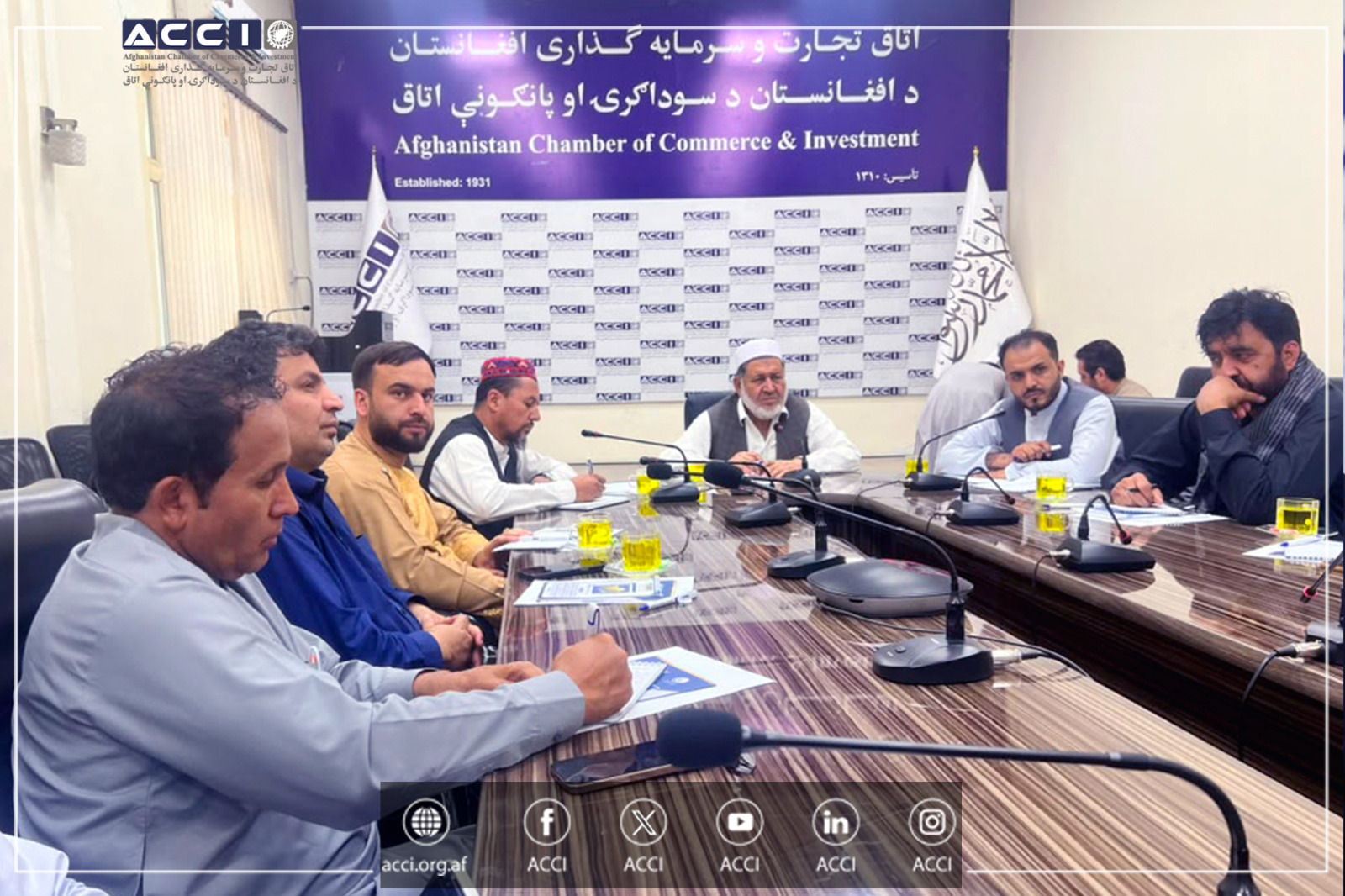
As part of ongoing trade engagement between the Afghanistan Chamber of Commerce and Investment (ACCI) and Uzbekistan’s sectoral authorities, an online meeting was held between Afghan textile traders and investors and their Uzbek counterparts.
The meeting was attended by Mr. Obaidullah Hotak, Chairman of the Garment Importers Union of Afghanistan, and Mr. Ahmad Shakil Hazem, Deputy for Policy and Technical Affairs of the Executive Board of ACCI. Representing Uzbekistan were Mr. Ruhullah Aka, Deputy Minister for Light Industry at the Ministry of Trade, along with a number of traders and investors from the country's textile and garment sector.
The discussions focused on plans for Afghan business delegations to visit textile factories and production centers in Uzbekistan, the establishment of large-scale textile manufacturing plants, and the revival of textile production factories in Afghanistan. Participants also exchanged views on the export of Afghan cotton to Uzbekistan and the import of Uzbek fabrics and garments into Afghanistan.
At the conclusion of the meeting, Mr. Ahmad Shakil Hazem emphasized the need to facilitate the issuance of long-term visas for Afghan traders and investors to support continuous business engagement and strengthen economic cooperation between the two countries. The deputy minister for Light Industry of Uzbekistan invited Afghan traders and investors to visit Uzbekistan’s textile sector and pledged cooperation in expanding travel and business facilitation measures.

Friday, August 8th, 2026
The second “Think Tank” session of the Afghanistan Chamber of Commerce and Investment (ACCI), held under the theme “Strong Economy, Prosperous Afghanistan” was convened at the main office of ACCI, with the participation of university professors, economists, academic and technical experts, advisors, and members of the Chamber’s leadership.
The session aimed to examine the country’s economic challenges, draw on academic and technical perspectives, and develop practical solutions for increasing production, expanding investment, boosting exports, creating employment opportunities, and achieving economic self-sufficiency in Afghanistan.
At the beginning of the session, Mr. Sayed Karim Hashemi, Chairman of the Afghanistan Chamber of Commerce and Investment, welcomed the participants and expressed his appreciation to the country’s professors, economists, and experts for their responsible participation.
He emphasized that Afghanistan, under the current circumstances, needs scientific thinking, practical solutions, and sincere cooperation among the government, private sector, and academic community more than ever.
The Chairman stated that natural resources alone cannot guarantee economic development and prosperity. Rather, sound planning, effective management, and the efficient utilization of national capacities are among the fundamental factors for the country’s sustainable development and progress.
Mr. Sayed Karim Hashemi added that the purpose of the Think Tank sessions is not merely to exchange views. Rather, the Chamber seeks to utilize the knowledge, experience, and expertise of the country’s professionals to develop a comprehensive economic roadmap and strategy, which will be presented as a national proposal to the leadership of the Islamic Emirate of Afghanistan.
He noted that the proposed solutions must be practical, implementable, and aligned with Afghanistan’s realities, while creating opportunities to reduce poverty, generate employment, strengthen investment, increase domestic production, expand exports, and reduce economic dependency.
The Chairman also highlighted Afghanistan’s extensive economic potential, including its natural resources and minerals, fertile agricultural land, strategic transit position, young workforce, and investment opportunities. He stated that effective utilization of these capacities, through sound planning and constructive cooperation between the government and private sector, could help pave the way toward achieving the vision of “Strong Economy, Prosperous Afghanistan.”
He called on the participating professors, economists, and specialists to present their views and practical recommendations with responsibility, dedication, and a national perspective. The Chairman assured participants that their recommendations would be systematically collected and compiled into a comprehensive and specialized document to be submitted to the relevant authorities of the Islamic Emirate of Afghanistan.
Subsequently, Dr. Ahmad Khosrow Zia, Advisor to the Afghanistan Chamber of Commerce and Investment, briefly explained the structure and objectives of the Think Tank and emphasized the need for greater coordination between the government and private sector, as well as the institutionalization of the Chamber’s academic and expert activities.
Mr. Azrakhsh Hafezi, Advisor to the Chamber, also emphasized the establishment of a coordinated framework for identifying shared priorities and solutions between the government and private sector and called on professors and experts to submit their academic and technical recommendations in writing.
The participating professors, economists, and experts shared their views and recommendations regarding the country’s economic challenges and expressed their readiness to provide academic and technical support in developing practical economic programs.
Participants emphasized the importance of utilizing the academic and research capacities of universities and research institutions and strengthening cooperation among the academic community, private sector, and relevant authorities.
At the conclusion of the session, appreciation was expressed for the participants’ presence and academic contributions, while the continuation of Think Tank sessions, compilation of specialized recommendations, and follow-up on their outcomes were emphasized.
The session represents an important step toward strengthening cooperation among academic experts, economic stakeholders, and relevant institutions, while creating a foundation for developing effective economic solutions aimed at achieving a strong economy and a prosperous Afghanistan.

More Articles ...