Tuesday, September 29, 2026
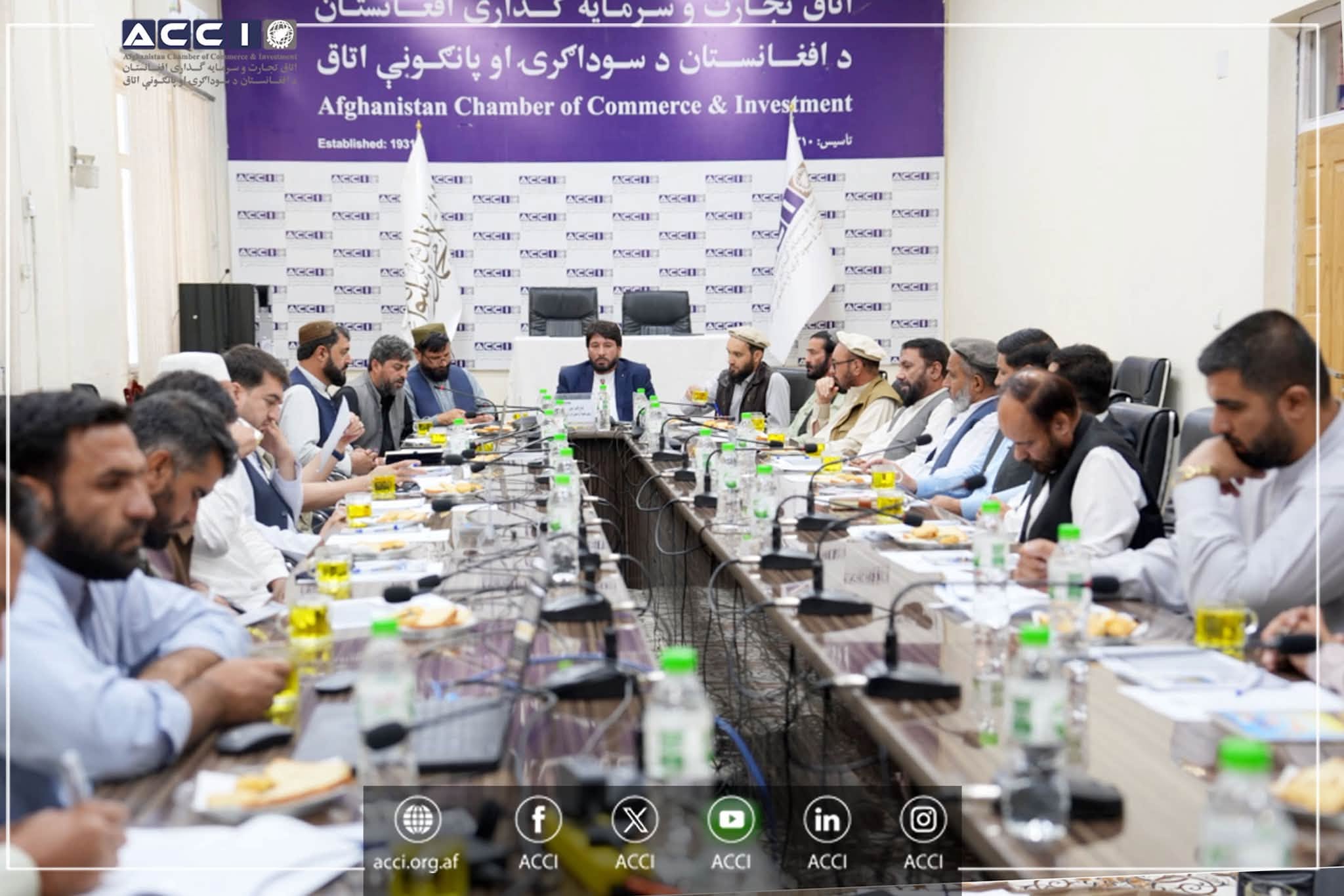
An internal meeting of the Transport and Transit Specialized Committee of the Afghanistan Chamber of Commerce and Investment was held under the chairmanship of Mr. Gul Mir Amini, Chairman of the Committee.
The meeting was attended by Mr. Ghulam Farooq Nabizada, Deputy Chairman of the Transport and Transit Specialized Committee, along with a number of officials and members of the Afghanistan Transport Companies Association and the Afghanistan Freight Forwarding Companies Association.
During the meeting, participants discussed and exchanged views on 38 issues and agenda items related to the transport, transit, and freight forwarding sectors and presented specific proposals aimed at improving the sector and addressing existing challenges.
Key issues discussed included standardizing transport companies and vehicles; enhancing the capacity of owners and drivers of freight vehicles and providing them with professional and modern training, particularly for heavy and high-tonnage vehicles; addressing existing challenges and restrictions at the country’s commercial ports and border crossings; strengthening the land transportation and logistics sector; and expanding railway transport services.
Other areas of discussion included the standardization of passenger terminals, addressing cross-border challenges faced by Afghanistan’s international transport vehicles, building capacity within freight forwarding networks, expanding logistics and passenger transport services, and facilitating the connection of these networks with reputable and internationally recognized standard networks.
Subsequently, to strengthen coordination, improve the organization of activities, and expand joint cooperation, a Memorandum of Understanding (MoU) was signed between the Afghanistan National Transport Association and the Transit and Freight Forwarding Association (AFCO).
Officials of ACCI’s Transport and Transit Specialized Committee expressed hope that the signing of the MoU would further strengthen coordination and cooperation among the relevant associations, contribute to more effective efforts to address existing challenges, and facilitate the provision of more standardized and organized services in the country’s transport, transit, and logistics sectors.