Friday, November 13, 2026
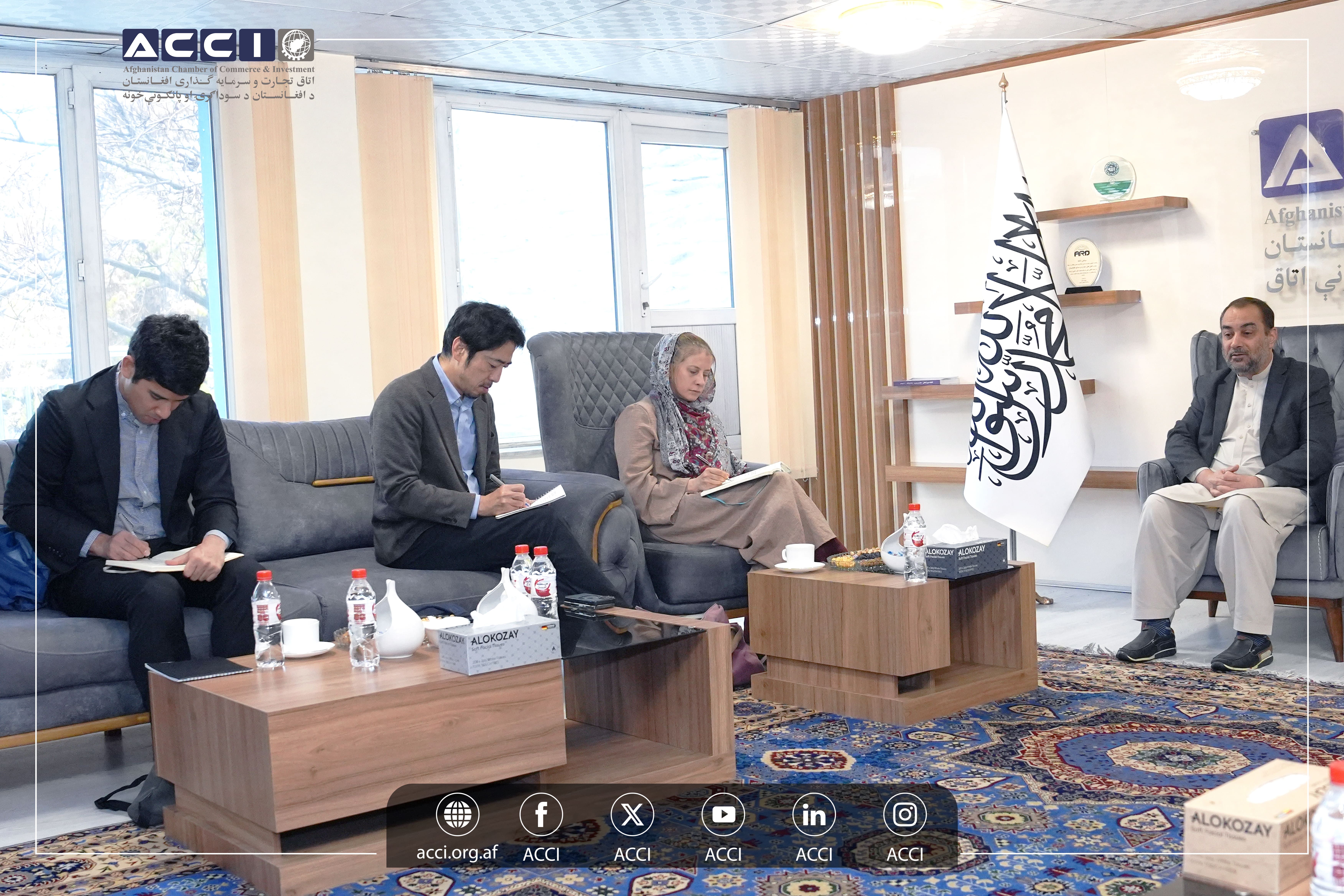
Mr. Mujib-ul-Rahman Shirzad, ACCI Deputy for Strategic Relations, met with officials of the United Nations Assistance Mission in Afghanistan (UNAMA) at the headquarters of the Afghanistan Chamber of Commerce and Investment.
The meeting followed the joint policy dialogue of the Private Sector Working Group, held on 4 November 2026 in Termez, Uzbekistan. The discussions focused on two key topics: “Standardization, Certification, and Export Readiness of Afghan Agricultural Products” and “Human Capital and Inclusive Economic Growth in Afghanistan.”
During the meeting with UNAMA officials, both sides exchanged views on how to follow up on and implement the decisions, recommendations, and proposed solutions from the Termez policy dialogue. They emphasized the need for practical measures and coordination among relevant institutions.
To translate the recommendations and decisions into practical programmes, ACCI Deputy for Strategic Relations proposed organizing two specialized workshops, initiated by ACCI in cooperation with UNAMA.
First Workshop: Addressing Export Barriers and Strengthening Quality and Standardization Infrastructure
The workshop will aim to identify and assess existing barriers to the export of Afghan products, particularly agricultural products, and develop a practical roadmap to address these challenges.
Other key areas of focus will include equipping, strengthening the capacity of, and financing quality control laboratories; enhancing testing and assessment services; improving certification procedures; and facilitating the implementation of standards required by export markets.
Officials from relevant government institutions, representatives of the private sector, and international community organizations are expected to participate in the workshop. Through joint cooperation, they will identify responsibilities, specific actions, and implementation timelines for each proposed solution.
Second Workshop: Identifying Skilled Workforce Needs and Developing a Roadmap for Human Capital Development
The second workshop will focus on the shortage of skilled and specialized workers across various economic sectors. In this regard, it was proposed that a comprehensive and detailed survey be conducted based on the country's economic sectors and geographical regions to identify the actual demand for skilled, technical, and specialized workers in each sector and region.
Based on the survey findings, a short, medium and long-term roadmap will be developed for training, developing, and supplying the human resources required by the labour market. The responsibilities, necessary actions, and implementation timelines will also be defined for the relevant institutions.
The participation of public and private universities, the Technical and Vocational Education and Training Authority, the Ministry of Labour and Social Affairs, other relevant ministries and institutions, private sector representatives, and international community organizations was considered essential to ensuring alignment between the actual needs of the labour market and the country's educational and academic programmes.
UNAMA officials appreciated the initiatives, recommendations, and professional solutions presented by ACCI and assured the Chamber of their readiness to provide practical cooperation in following up on and implementing the proposed recommendations.
ACCI believes that translating policy dialogue into practical action requires close cooperation among government institutions, the private sector, and international partners. As the representative and advocate of the private sector's interests, the Chamber will continue its efforts to address trade and export barriers, develop human capital, and promote the country's economic growth through coordination, specialized recommendations, and follow-up on practical solutions.